
What mental picture does your hometown evoke? Certainly, the Village and rural surrounds of Powhatan County conjures a pleasant image. But, just for fun, let’s turn the clock back and take a brief walk through time to view a very different picture of the people and events that shaped the present.
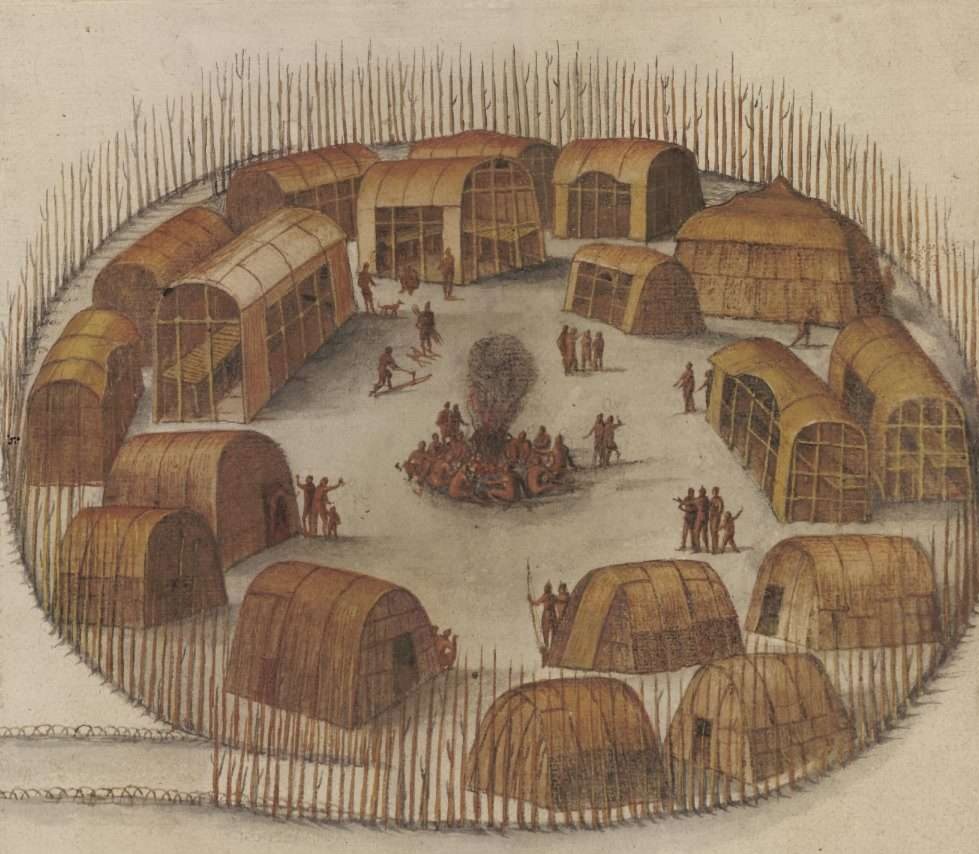 Should you have wandered these grounds in the 1600s, you’d have rubbed elbows with enterprising native Americans from the Monocan and Mannahoac tribes who lived in villages protected by palisaded walls with dome-shaped homes made from bark and reed mats. They mined copper for necklaces that were highly valued by the Powhatans, who bore the name of their influential Algonquian leader and father of Pocahontas, Chief Powhatan.
Around 1700, you might have met Protestant Huguenots fleeing religious persecution in France. They were given 10,000 acres of land along the James River (near 288 and Huguenot Trail) by the English government and founded Manakintown near former Monacan villages. As a nod to their culture and influence, quite a few places today bear the name Huguenot.
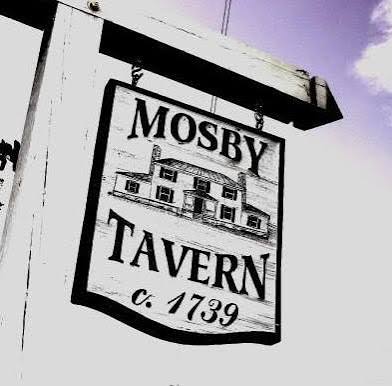 Suppose you were thirsty for a good ale around 1740. A gentleman named Benjamin Mosby would’ve hosted you in his tavern–a raucous center of community life (near Anderson Highway and Trenholm) that later served as a militia rendezvous during the American Revolution. It also served as the county’s courthouse and jail until 1779, when the county seat moved to a newly built courthouse in Scottville. Today, the original building still stands as a private residence, and, as of this writing, the 22-acre Mosby Tavern Farm is currently listed for sale, offering a rare opportunity for local enthusiasts to actually own a tangible part of Powhatan’s history.
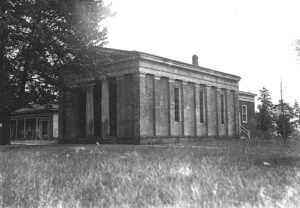 As a resident here in the 1770s, your mailing address would have been “Scottville.” But at that time, there were two Virginia towns bearing that name–this county and also in Albermarle County. Thus, to avoid postal confusion, our modern-day hamlet was changed to the name we know today: “Powhatan”.
In 1849, you would have proudly gazed upon the newly completed 18th-century Greek Revival courthouse designed by famous New York architect Alexander Jackson Davis, which still presides over the Village Historic District today. During the Civil War’s final days, you might have seen retreating Confederate troops passing through the Courthouse
District. And afterward, during the summer of 1865, the news that General Robert E. Lee and his family were staying in town for the summer at a nearby country estate would have dominated the local chatter.
Alas, time and space fail us, so our brief stroll through the ages must come to an end. Along the way, we’ve seen much that has shaped what Powhatan residents know and love today. Hopefully, we’ve enhanced YOUR mental picture of home.
Editorial by Kim Amboy; October 2026